
Expressway Projects Reshaping India's Real Estate Map in 2026
Summary
India's expressway boom is reshaping real estate. Key projects like the Delhi-Mumbai Expressway are unlocking new corridors and investment opportunities near interchanges and industrial zones, offering significant appreciation potential for investors.

Introduction
India is building roads at a pace that would have seemed optimistic even ten years ago. And not just roads. Access-controlled, high-speed expressway projects India that are collapsing distances between cities, opening up land that was too far to develop, and creating entirely new real estate corridors that did not meaningfully exist before the tarmac arrived. For property buyers and investors paying attention to where the next wave of appreciation is coming from, expressways are the single most reliable infrastructure signal available. They are not subtle. They are enormous, they take years to build, and their impact on surrounding property markets is consistent enough to be studied, predicted, and acted on.
Delhi Mumbai Expressway: The Corridor That Changes Everything
The Delhi Mumbai Expressway is the headline act of India's current infrastructure story. Stretching over 1,350 kilometres and passing through Haryana, Rajasthan, Madhya Pradesh, and Gujarat before reaching Maharashtra, this is the longest expressway project the country has ever attempted. Large sections have already opened to traffic and the full corridor is expected to be operational through 2026.
What makes this particularly interesting from a real estate angle is the scale of the land that becomes accessible along its route. Cities like Dausa, Kota, Vadodara, and Surat all sit within the expressway's influence zone. Industrial parks, logistics hubs, and residential townships are already being announced along its alignment at a pace that tells you developers read infrastructure maps just as carefully as investors do.
Samruddhi Mahamarg: Maharashtra's Transformation Highway
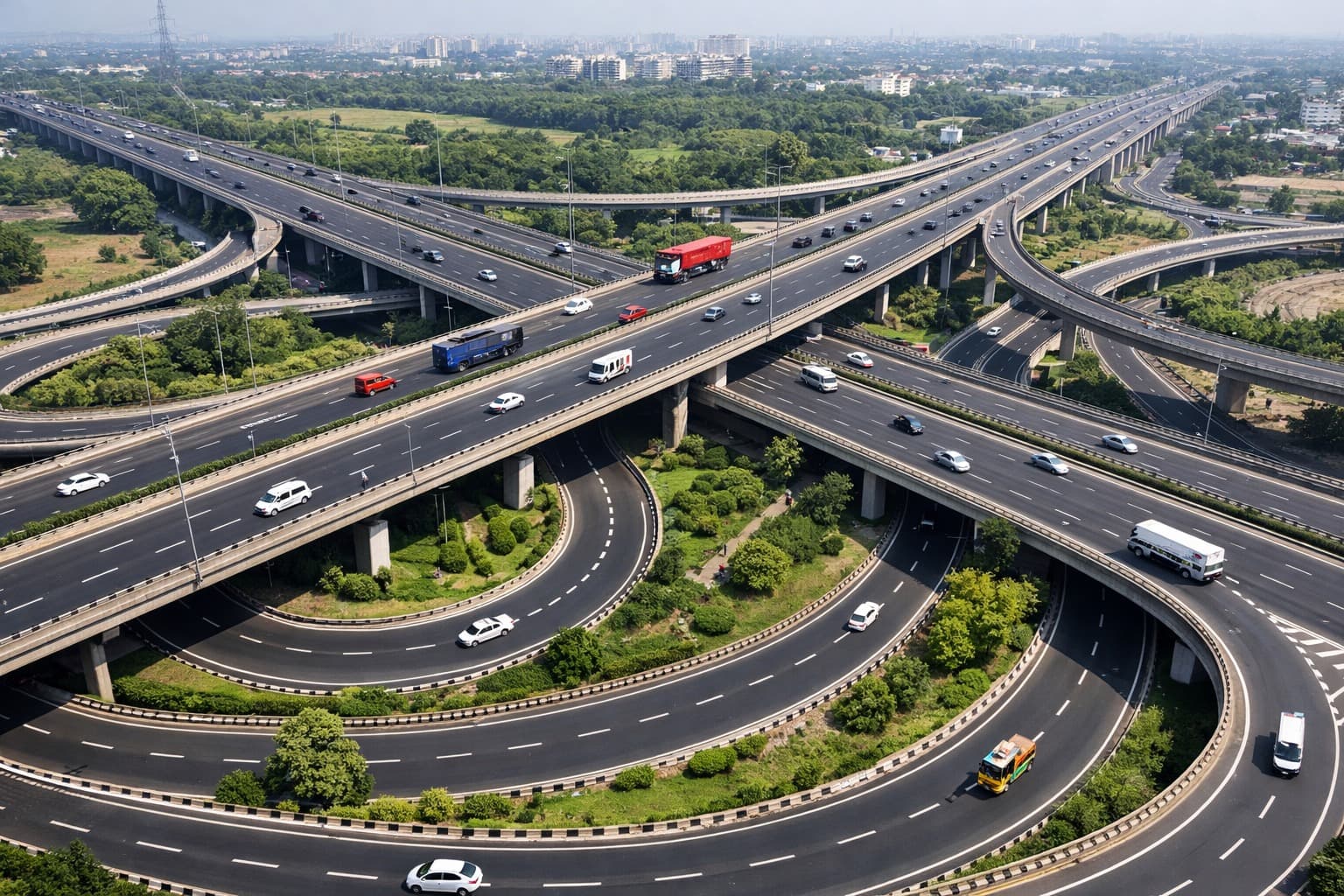
The Samruddhi Mahamarg connecting Mumbai to Nagpur across 701 kilometres has been operational for a while now, and the real estate data along its corridor is already telling a clear story. Nashik, Shirdi, Aurangabad and the districts of Vidarbha that were once considered too remote for organised real estate investment are now seeing developer interest that simply did not exist before this road.
The Samruddhi Expressway did something specific that most infrastructure projects do not. It brought Nagpur, one of India's genuinely underappreciated real estate markets, within accessible range of Mumbai's capital and developer ecosystem. Property values in Nagpur's premium residential corridors have responded accordingly.
Bengaluru Chennai Expressway: South India's Big Connectivity Leap
South India has its own expressway story running. The Bengaluru Chennai Expressway spanning roughly 260 kilometres is under active construction and promises to reduce travel time between the two cities to under two hours. That kind of time compression does not just help travellers. It creates a commutable distance relationship between two of India's largest tech employment centres.
The towns along this alignment, particularly on the Karnataka side near Hoskote and on the Tamil Nadu side approaching Ranipet and Walajapet, are already attracting industrial and residential developer interest. When the expressway opens, those locations become part of a connected economic corridor rather than isolated small towns.
Ganga Expressway: Unlocking Uttar Pradesh's Interior
Uttar Pradesh has been the most aggressive state in India when it comes to expressway infrastructure, and the Ganga Expressway is the latest and longest addition to that story. Stretching over 594 kilometres from Meerut to Prayagraj, it passes through districts that have historically had limited connectivity and therefore limited real estate investment interest.
But that is exactly the point. The Ganga Expressway is the kind of project that creates value in places most investors have not yet looked at. Prayagraj itself is a city with genuine economic and cultural significance that has been held back partly by connectivity. A direct expressway link to the NCR changes that calculation meaningfully over the next five to seven years.
Delhi Dehradun Expressway: The Mountain Gateway Effect
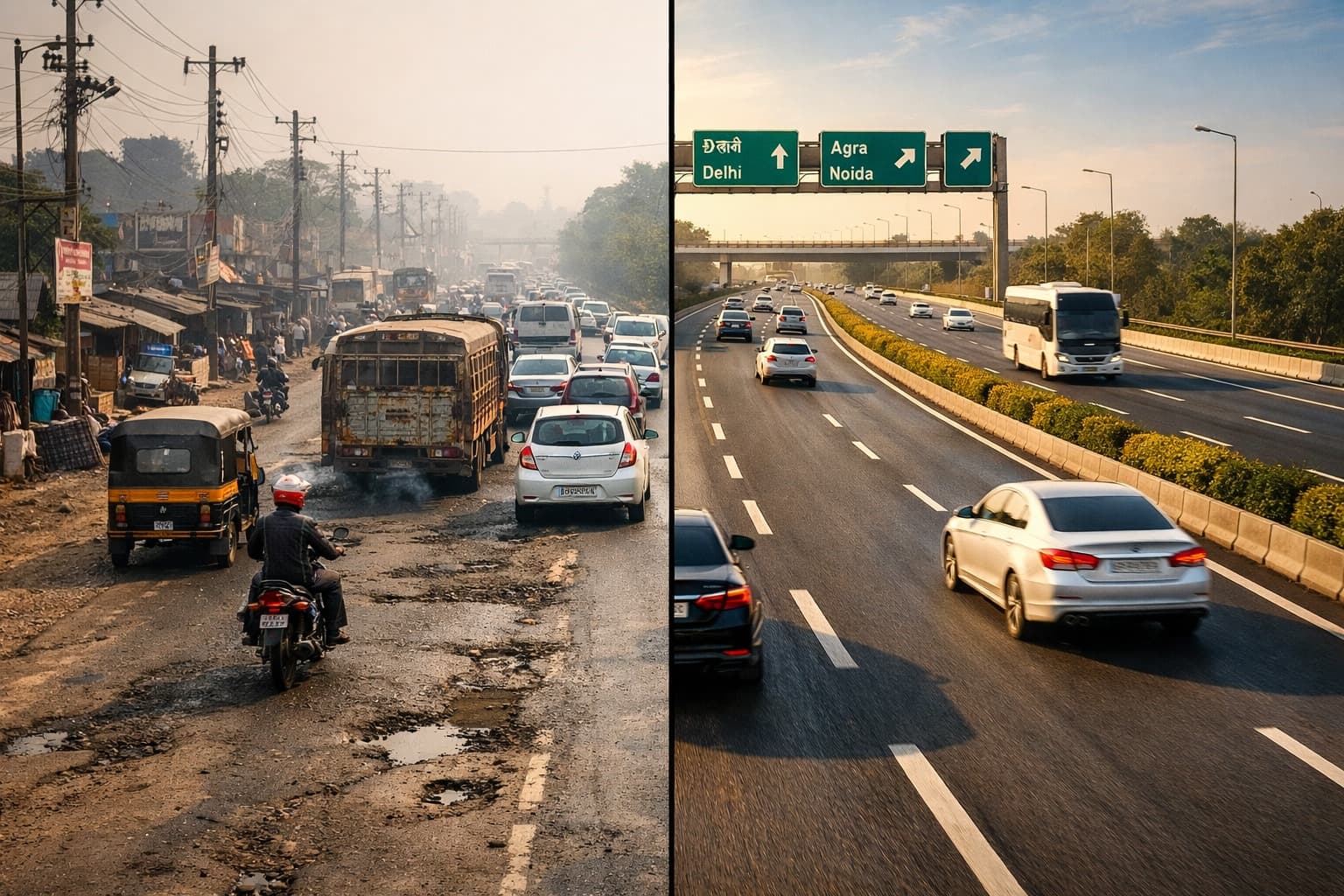
The Delhi Dehradun Expressway is a project that the second-home buyer market is watching very closely. Reducing travel time from Delhi to Dehradun to under two and a half hours effectively makes the Doon Valley a viable weekend destination for the entire NCR buyer base. That is a lot of demand suddenly finding a geography it can practically access.
Dehradun's residential market has already been running hot. Mussoorie and the surrounding hill districts are benefiting from the anticipation effect even before full commissioning. This is how expressway real estate India impact works. The appreciation often begins long before the ribbon cutting.
The Investor's Framework for Expressway Bets
Not every expressway creates equal value at every point along its route. The real appreciation concentrates at interchange locations, near proposed industrial nodes, and in the first major city that the expressway brings within commutable range of a larger metro. Buying land or property in the middle of an expressway alignment with no node nearby is a very different proposition from buying near a designated interchange with planned development around it.
Summary
India's top expressway projects in 2026, from the Delhi Mumbai Expressway to the Bengaluru Chennai and Ganga Expressway corridors, are actively redrawing the country's real estate opportunity map. Expressway corridor properties near interchange nodes and industrial zones offer some of the most compelling appreciation potential available to Indian investors right now. Infrastructure of this scale moves slowly but its impact on surrounding property prices is consistent, durable, and well worth positioning ahead of.
Video will be embedded from: https://www.youtube.com/watch?v=QLRNIdpnkkg