
Bhumkar Chowk Road Widening: Addressing Hinjewadi IT Park Traffic Congestion
Summary
The Bhumkar Chowk road widening project aims to ease Hinjewadi IT Park's traffic woes. This ₹650 crore plan includes flyovers and wider roads to reduce congestion and improve commute times, though delays persist.

Introduction
For years, commuters between Bhumkar Chowk and Hinjewadi IT Park have faced long and painful travel times every day. This is mainly due to rising traffic, rapid growth of technology companies, and busy arterial roads that were not designed for such heavy use. To ease this traffic congestion, authorities have launched a major road widening project and related infrastructure upgrades worth hundreds of crores of rupees. This blog explores how road widening and other improvements could transform commuting, reduce delays, and finally address the long‑standing travel problems in one of Pune’s busiest corridors.
1. The Growing Traffic Problems Around Hinjewadi
Hinjewadi IT Park is one of Pune’s largest employment hubs, with thousands of professionals commuting daily from nearby areas such as Wakad, Punawale, and Tathawade. As companies expand their offices and new residential developments emerge, the number of vehicles on the arterial roads has surged. At peak hours, local motorists often spend hours stuck in traffic, especially around choke points like Bhumkar Chowk and Laxmi Chowk. This situation has caused frustration and lost productivity for many commuters and residents alike. Reports show gridlocks and heavy traffic during weekdays remain a severe issue in the broader Pimpri‑Chinchwad area.
2. What Is the Bhumkar Chowk Road Widening Project?
In response to this problem, the Pimpri‑Chinchwad Municipal Corporation (PCMC) and the Maharashtra Industrial Development Corporation (MIDC) have proposed major upgrades, including road widening, new flyovers, and alternative routes to relieve the pressure on existing infrastructure. One of the key components is the expansion of the main road at Bhumkar Chowk, increasing lane capacity to accommodate more vehicles and reduce bottlenecks. According to planning documents, the current narrow stretches will be widened, and key intersections will be restructured to enable smoother flow.
The project also includes increasing lane width from four to six lanes on key sections near Bhumkar Chowk, which will allow vehicles to move faster and safely, and improve connectivity to Hinjewadi IT Park and its multiple phases.
3. The ₹650 Crore Infrastructure Plan
The overall traffic‑easing plan around Hinjewadi includes several large‑scale construction efforts budgeted at around ₹650 crore. These include a new multi‑lane flyover, widened arterial roads, and alternative roads connecting different phases of the IT Park. The four‑lane flyover at Laxmi Chowk is designed to handle heavy volume during peak office hours. A six‑lane road expansion from Chhatrapati Shivaji Chowk to other junctions is also planned, as well as a new 5‑kilometer road that will link Phase I with Phase III of the IT Park.
However, despite clear planning and budget allocation, these projects have faced administrative delays, especially concerning land acquisition. Responsibility has shifted between departments, slowing actual construction work and disappointing many commuters.
4. How Road Widening Helps Commuters
Well‑designed road widening leads to multiple benefits for daily commuters and the overall urban environment. When lanes are expanded:

Traffic congestion reduces because more vehicles can move simultaneously without blockage.
Travel time drops significantly, especially in peak hours.
The risk of accidents decreases as vehicle flow is more organized.
Public transportation and emergency vehicles can move faster.
Wider roads also allow for better walking paths and bicycle lanes, which encourage people to use alternate modes of transport. For areas around Hinjewadi, which experience heavy commuter inflow, this can make local travel faster and safer.
5. Challenges Slowing Down Progress
Despite the clear benefits of road widening and flyover construction, the projects have faced several challenges. Most importantly, land acquisition for expanding road corridors has been slow due to disputes between government departments, lack of clear coordination, and negotiations with landowners. This has pushed back construction timelines.
Traffic planning experts also note that simply widening roads will not completely end congestion unless parking, illegal encroachments, and traffic signal timings are managed well. Improper enforcement of traffic rules and narrow stretches in adjacent areas still cause local jams.
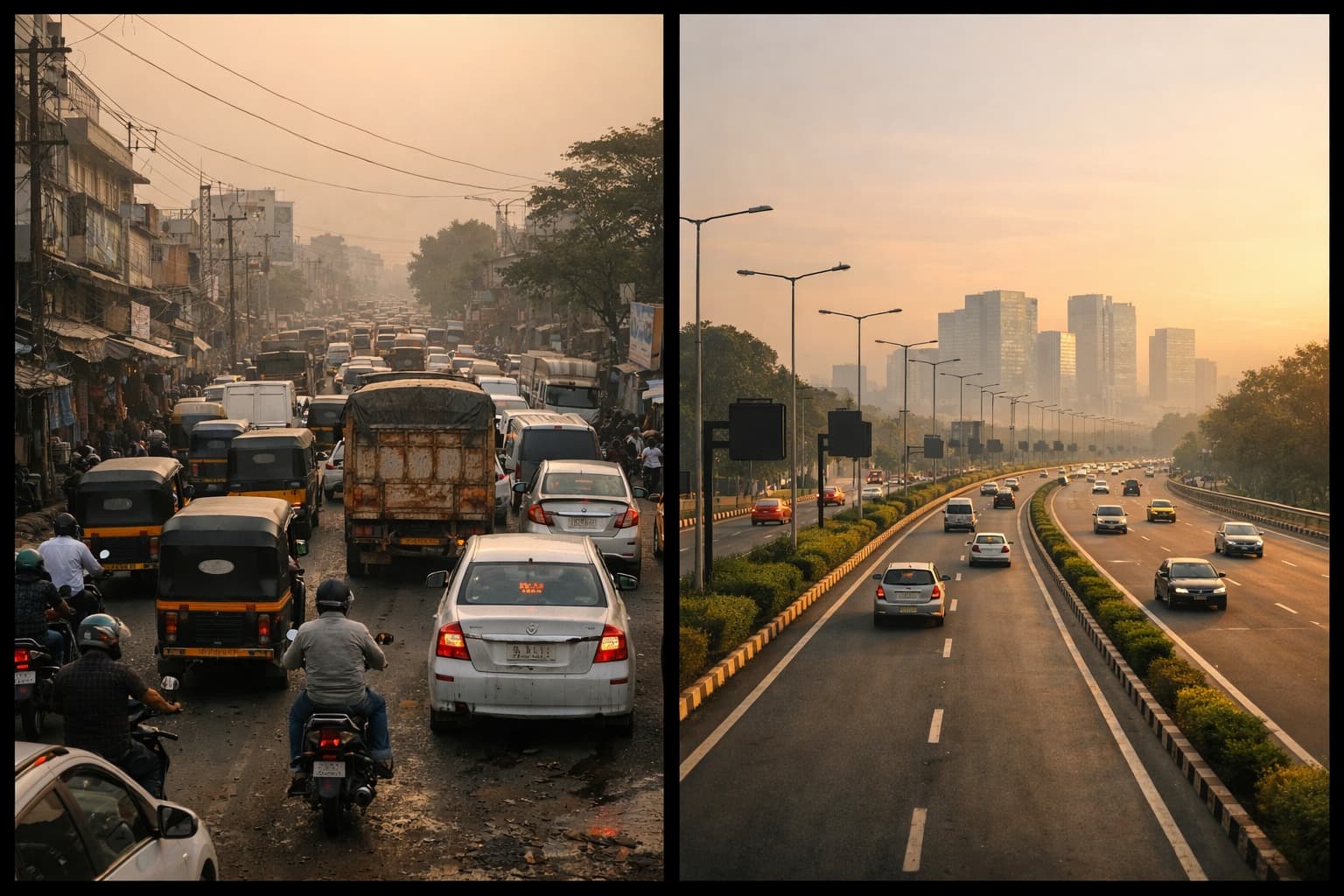
6. Interim Measures to Ease Traffic
While major infrastructure upgrades take time, authorities have introduced some short‑term adjustments to help commuters. One notable example is the modification of traffic flow over key bridges: authorities have designated Wakad‑Hinjewadi bridge to operate as one‑way during peak hours, with three lanes heading in the dominant traffic direction and one lane for return traffic as needed. This adaptive system has been introduced on a trial basis to improve flow during rush hours.
Additionally, the formation of a Single Point Authority was proposed to streamline project coordination across departments and reduce bureaucratic delays, which could speed up implementation when combined with other measures such as integrated traffic monitoring systems and upgraded service roads.
7. What Residents and Commuters Are Saying
Feedback from local residents and employees highlights how severe traffic issues have become. Many commuters report daily delays of up to two hours just to travel a few kilometers from their homes to the IT Park. This leads to frustration and questions about whether infrastructure improvements can really keep pace with rapid urban growth. Some also point out that infrastructure needs to expand beyond just widening roads, including better public transport, pedestrian paths, and improved drainage and signage to prevent monsoon‑related slowdowns.
Public sentiment reflects a mix of hope and impatience. Many believe that if the road widening and flyover projects are completed efficiently, it could significantly reduce travel time and daily hardships. At the same time, commuters stress the need for better planning and faster action from authorities so that the benefits are not perpetual promises but real improvements on the ground.
Summary
The road widening project at Bhumkar Chowk and surrounding areas near Hinjewadi IT Park represents a major effort to address chronic traffic congestion in Pune’s busiest IT corridor. With plans for flyovers, wider lanes, and new connectors worth around ₹650 crore, authorities aim to reduce daily travel delays and improve commuter experience. While land acquisition and administrative delays have slowed progress, interim measures like adaptive traffic flow systems are helping. If fully implemented, these upgrades could significantly improve mobility, reduce commute times, and support sustainable urban growth.
Video will be embedded from: https://www.youtube.com/watch?v=2JKe1-tCmeo