
Badlapur Railway Station Transformation: Impact on Commute and Property Prices
Summary
Badlapur Railway Station's transformation, including new lines and station upgrades, promises faster commutes and higher property values. Infrastructure projects like the Kalyan-Badlapur third and fourth line, the Badlapur-Karjat extension, and the SATIS project are key.

Badlapur Railway Station
Introduction
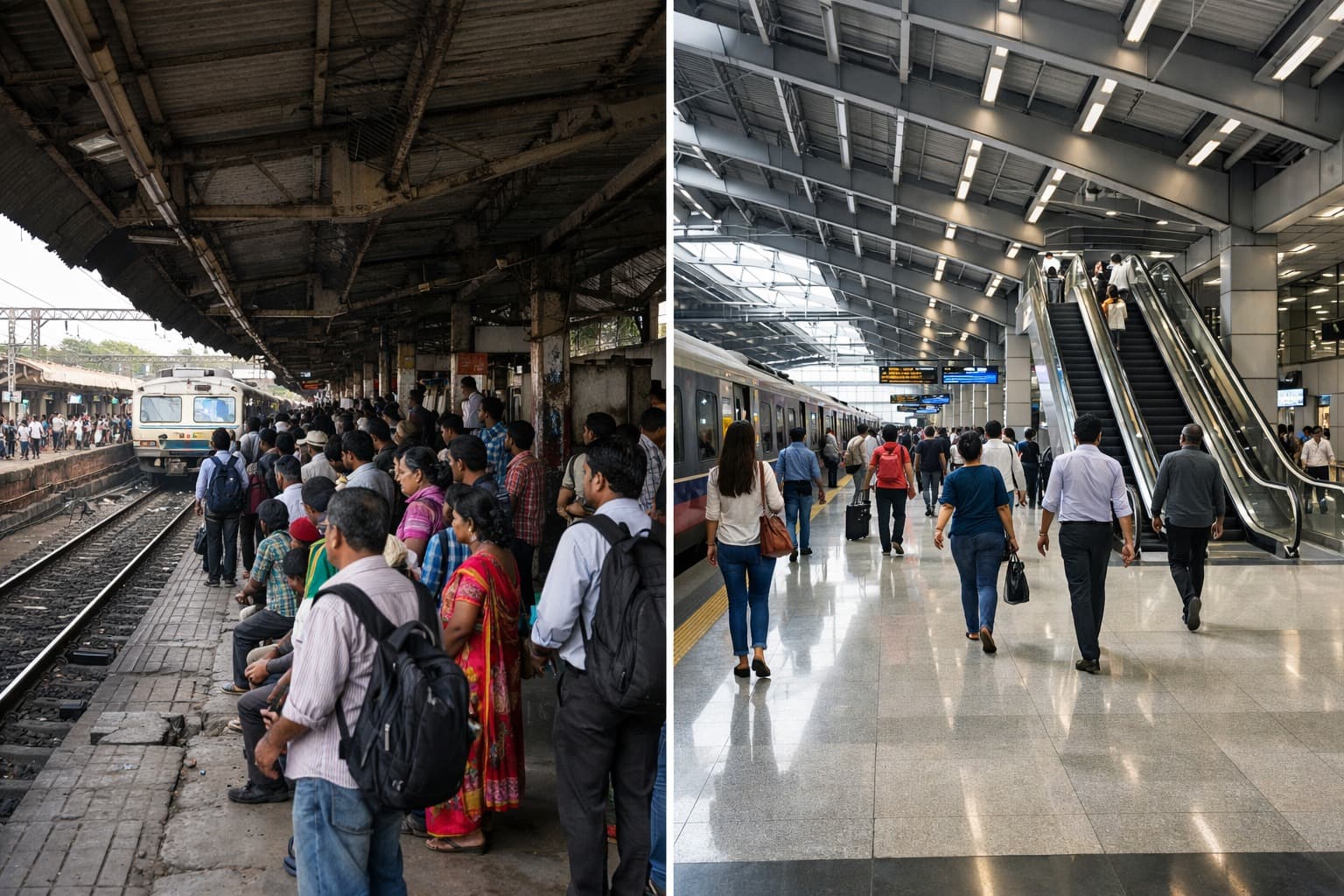
For years, Badlapur was the edge case in Mumbai's suburban property market. Affordable, yes. Green, yes. But a station that felt like an afterthought — crowded platforms, chaotic exits, and a commute that punished anyone trying to reach South Mumbai before 9 AM. That narrative is changing at speed. A convergence of three simultaneous infrastructure interventions at and around Badlapur railway station is reshaping what this address means for homebuyers, investors, and daily commuters. And the timing could not be better for anyone watching Central corridor real estate in 2026.
The Core Problem Badlapur's Station Has Always Had
Badlapur Mumbai local train services run on a two-line track shared between suburban locals, mail and express trains, and goods traffic. That shared corridor is the single biggest operational bottleneck in the entire Kalyan-Karjat stretch. When an express train holds the line, locals bunch up. Frequencies drop. Platforms overflow. Anyone who has stood on Platform 1 at Badlapur during morning peak hours understands why this upgrade matters more than aesthetics.
The station itself has been operationally patched over the years rather than systematically rebuilt. Platform mismatches, aging foot overbridges, and a station exit that feeds directly into one of the most chaotic traffic intersections in Thane district — these are daily friction points that have quietly suppressed the address premium Badlapur's natural environment would otherwise command.
The Kalyan–Badlapur Third and Fourth Line: The Centrepiece
The Kalyan Badlapur third fourth line MRVC project, sanctioned at Rs 1,510 crore, is targeted for completion by December 2026 and has achieved around 30% physical progress as of October 2025. The core objective is straightforward but transformative: two dedicated tracks exclusively for suburban local trains up to Karjat, separating them entirely from mail, express, and goods traffic.
The separation of tracks means local trains will no longer be delayed by a goods rake blocking the line or an express needing priority clearance. For Badlapur commuters, this translates to higher frequency, better punctuality, and meaningfully shorter journey times to Thane, Dadar, and CST. That is not a minor convenience improvement. It is a structural change in what the daily commute from Badlapur actually feels like.
As part of this project, MRVC will also construct a new booking office and public toilet at the Kalyan end of Platform 1, add a 6-metre-wide foot overbridge connecting skywalks on both east and west sides, and complete an elevated station building with a new circulating area. A 118 by 18-metre elevated deck connecting the two main FOBs over Platforms 1 and 2 was partially commissioned in March 2025. The remaining section follows this year.

The Badlapur–Karjat Extension: Connectivity Goes Further
The infrastructure story does not stop at Badlapur. Cabinet has approved the Badlapur Karjat railway line project at Rs 1,324 crore covering 65 km, a key link for the Mumbai suburban system forming part of the Mumbai-Chennai high-density network. This extension pushes dedicated suburban track all the way to Karjat, turning stations along this stretch from relative isolation into proper suburban addresses.
For Badlapur specifically, being a station between two confirmed infrastructure investments — the Kalyan–Badlapur upgrade on one side and the Badlapur–Karjat extension on the other — creates a pincer of connectivity improvement that very few stations in MMR currently enjoy simultaneously.
SATIS: Fixing the Chaos Outside the Station
Trains are only half the commute. The other half is the 500-metre chaos between the station exit and the rest of the town. MMRDA has begun implementing the Badlapur station SATIS MMRDA project, with the upgrade covering the 500-metre radius around the station — the standard walking distance for last-mile connectivity to mass transit nodes.
The SATIS project will deliver widened footpaths, relocated bus stations, dedicated cycle stands, private vehicle areas, CCTV surveillance, and route signage. It also includes provision for metro feeder connectivity through electric vehicles, anticipating the future metro line planned for this corridor. Revenue to fund construction and maintenance will come from pay-and-park facilities and advertising lease income, so this is not a project waiting indefinitely for budget allocation.
What All of This Means for Badlapur Property Prices
Badlapur property prices railway connectivity is a story that careful observers have been tracking since the third line project was first sanctioned. Land and flat values in Badlapur have historically stayed in the Rs 4,000 to Rs 6,500 per square foot range, a significant discount to Ambernath and a massive gap from Kalyan. That discount is built primarily on commute friction. Remove the friction, and the discount compresses.
Every major MMR infrastructure event that reduced commute time from an extended suburb produced the same pattern: appreciation accelerated well before project completion, peaked in the two years following commissioning, and then settled at a permanently higher base. Badlapur is currently mid-cycle in that pattern, with both the third line and SATIS still under execution.
The Metro Angle That Most Buyers Are Missing
Both the SATIS project documentation and the MMRDA planning literature specifically call out future metro integration at Badlapur station. The metro-rail feeder infrastructure being built into the SATIS design is not incidental — it signals that the planning framework anticipates a metro corridor reaching this far into the Central suburbs. Buyers entering the Badlapur market today are implicitly buying optionality on a metro connection that is not yet priced into the market.
Why This Station Upgrade Matters Beyond the Headlines
The combination of dedicated suburban tracks, a rebuilt station with proper skywalks and booking infrastructure, a reorganised station exit zone, and eventual metro integration makes Badlapur infrastructure upgrade 2026 arguably the most comprehensive station-area transformation in the extended Central corridor right now. Cities do not outgrow their commute constraints overnight. But when three separate agencies tackle the same friction point simultaneously, the transformation accelerates far faster than incremental projects ever could.
Summary
Badlapur railway station is in the middle of its most significant infrastructure transformation in decades. The Kalyan Badlapur third and fourth railway line at Rs 1,510 crore separates suburban and mainline traffic to deliver faster, more frequent locals by December 2026. The Badlapur Karjat new railway line at Rs 1,324 crore pushes that improvement further south. The SATIS project reorganises the entire 500-metre station precinct for pedestrians, buses, and future metro feeders. Together, they answer the only real question holding Badlapur real estate back: the commute problem. And once that answer is delivered on the ground, Badlapur property prices will reflect it permanently.
Video will be embedded from: https://www.youtube.com/watch?v=dXOOlP289Yc