
Ambarnath: Where Industrial Boom Meets Suburban Comfort in Mumbai's Extended Orbit
Summary
Ambarnath blends industrial activity with suburban living, offering affordable housing and railway connectivity. Its planned development, stable rental market, and consistent property appreciation make it attractive for first-time homebuyers and investors.

Introduction
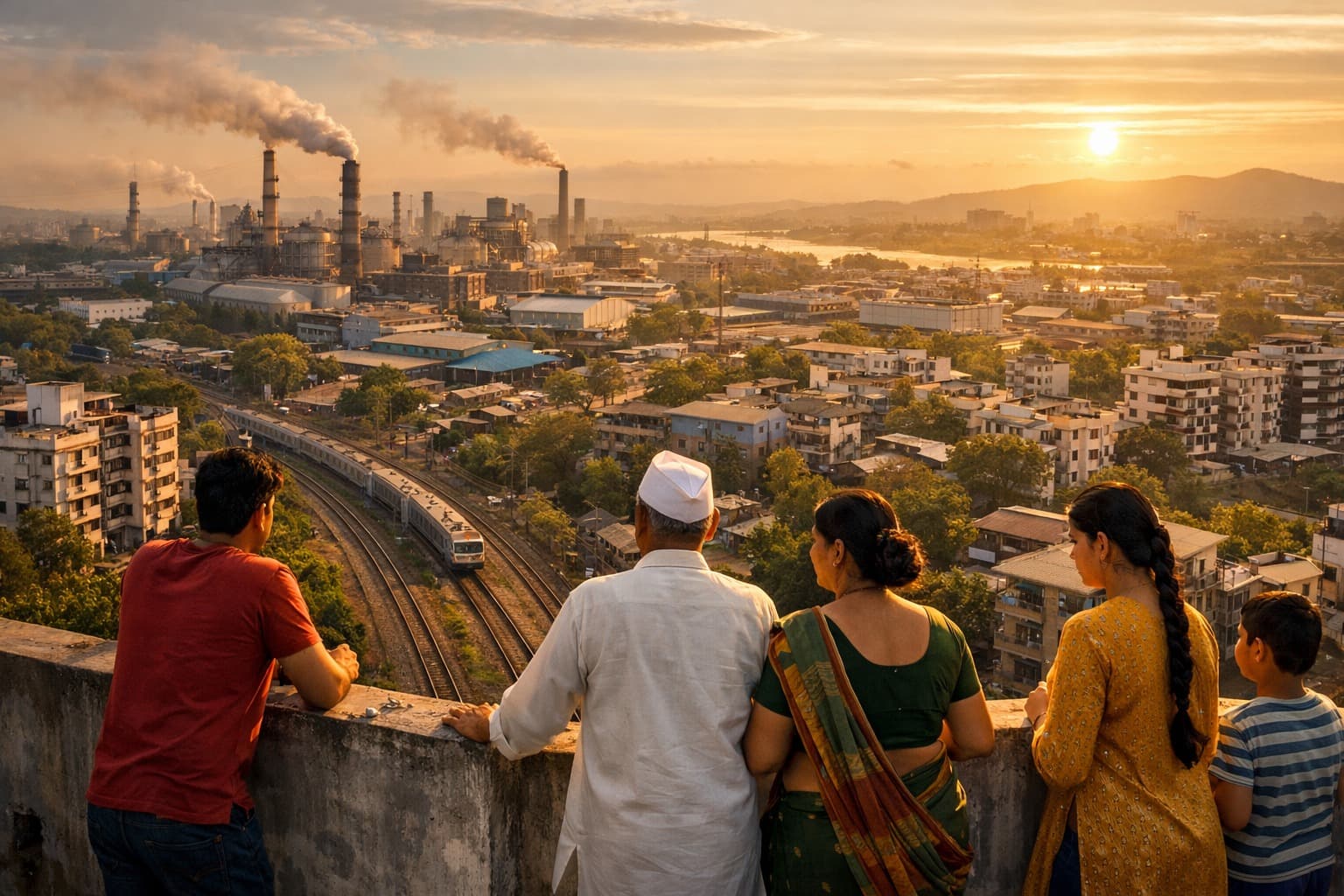
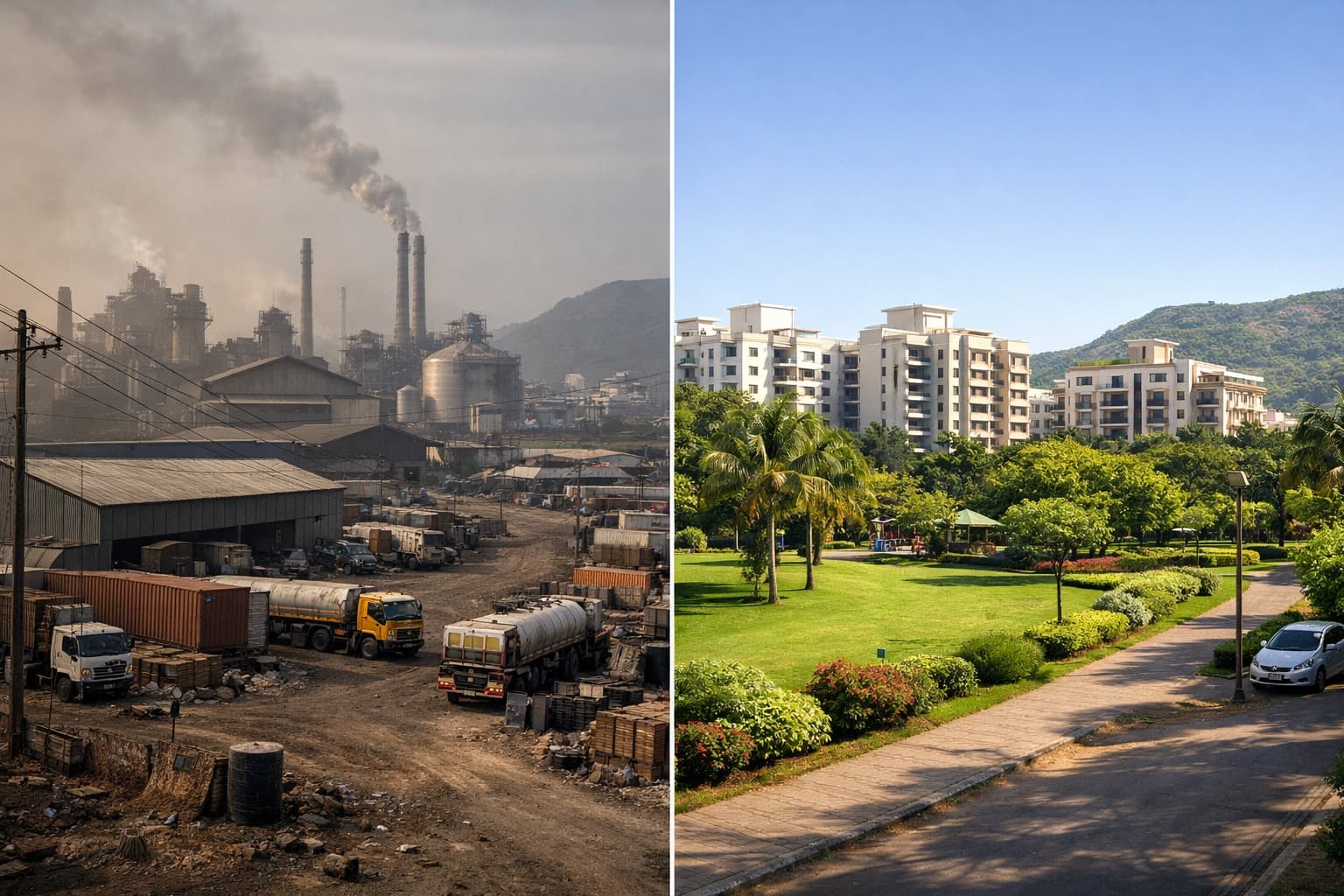
There are towns in Mumbai's extended orbit that exist in two minds simultaneously. Ambarnath is one of them. On its western side, hundreds of chemical and manufacturing units hum along roadsides lined with industrial sheds. On its eastern side, multi-storey residential towers rise quietly above tree-lined lanes, schools, and local markets where families have been building lives for decades. This split personality is not a liability. For homebuyers and investors who understand the MMR market, it is precisely what makes Ambarnath interesting in 2026.
The Industrial Foundation
Ambarnath West is one of Maharashtra's most established industrial zones. Over a hundred small and large-scale industries operate here, with a concentration in chemicals, pharmaceuticals, manufacturing, and light engineering. Major manufacturing facilities have been present in this belt for generations, providing stable local employment that underpins the residential rental market in the area. When an industrial zone of this scale and vintage anchors a town, the demand for worker housing, staff quarters, and middle-management homes becomes structural and durable rather than cyclical.
MMRDA, as the Special Planning Authority for the Ambarnath, Kulgaon-Badlapur and Surrounding Notified Area (AKBSNA), has demarcated clear industrial and residential zones within its 212.45 square kilometre jurisdiction. This planned separation of land use has allowed the residential corridors in Ambarnath East and Badlapur to develop distinctly from the industrial areas, giving buyers genuine green-zone residential options without the air quality concerns that come from proximity to active manufacturing belts.
The Residential Story: Ambarnath East
Ambarnath East is the residential soul of this city. What began as villas and independent houses has gradually transitioned into a dense market for mid-rise and high-rise apartment developments. The area has all the foundational infrastructure that families look for: schools affiliated with national and state boards, hospitals, markets, and community spaces. The presence of the ancient Shiv temple, which draws visitors throughout the year and draws large gatherings during Maha Shivratri, gives the town a cultural identity that makes it feel less like a satellite dormitory and more like a settled community.
Property prices in Ambarnath have shown consistent appreciation over the past five years. In 2020, average rates ranged from approximately ₹3,800 to ₹4,200 per square foot. By 2025, that range had moved to roughly ₹4,500 to ₹5,000 per square foot, depending on location and project quality. This represents a steady compounded appreciation that has rewarded buyers who entered the market at the affordable end of the MMR spectrum without requiring them to stretch budgets the way buyers in Thane or Navi Mumbai must. For buyers priced out of those markets, Ambarnath offers genuine value with a trajectory that shows no signs of reversal.
The Railway Advantage
Ambarnath has one of the most reliable connectivity assets available to any outer suburb of Mumbai: a station on the Central Line. The Central Railway corridor is one of the busiest suburban rail networks in the world, running trains at intervals of just a few minutes during peak hours. A commuter living in Ambarnath can reach Kalyan in under fifteen minutes, Thane in under forty, and CST in roughly ninety minutes to two hours depending on train type. For families where one or more members work in central Mumbai or along the Central Line corridor, this is a perfectly workable commute at a fraction of the cost of living closer to the city.
The Central Line also connects Ambarnath directly to Badlapur further east, creating a natural residential continuum along the Ulhas River valley. Buyers who want even larger apartments or plotted options at lower prices extend their search to Badlapur, while those who want faster access to Kalyan and Thane lean toward Ambarnath.
MMRDA's Role and Planning Context
The MMRDA as Special Planning Authority governs development within the AKBSNA, covering two municipal councils and 60 surrounding villages across approximately 212 square kilometres. The development plan for the area was sanctioned in 2005 and has been modified several times since to accommodate affordable housing, residential zone expansions, and infrastructure upgrades. Zoning decisions have reserved generous portions of the rural area for green zones, keeping the environment around Ambarnath and Badlapur noticeably greener than comparable outer suburbs in the western MMR belt.
Water supply for the area draws from the Ulhas River system, with MIDC and Maharashtra Jeevan Pradhikaran as major supply authorities. Infrastructure financing for the notified area has also been supported through MMRDA's various schemes, ensuring that development is not left entirely to private developers.
Who Should Consider Ambarnath
Ambarnath makes the most sense for three buyer profiles. First-time homebuyers in Mumbai who have a budget of ₹40 to ₹70 lakh and need genuine connectivity to the Central Line corridor will find modern two and three-bedroom apartments here at prices still meaningfully below what comparable projects cost in Dombivali or Thane. Industrial workers and mid-management professionals employed in Ambarnath West or nearby MIDC areas who prefer to eliminate commutes entirely form the second strong segment. Investors looking for rental yield from a stable, employment-backed residential market with sustained price appreciation form the third.
Summary
Ambarnath sits at the productive intersection of industrial employment and suburban living in the extended MMR. With property prices in the ₹4,500 to ₹5,000 per square foot range, consistent appreciation over five years, Central Line railway connectivity, a well-planned residential east zone distinct from its industrial west, and MMRDA oversight under a structured development plan, this is a market that rewards long-term thinking. The industrial boom continues to anchor demand, and the suburban comfort continues to improve. Both are moving in the same direction.