Introduction
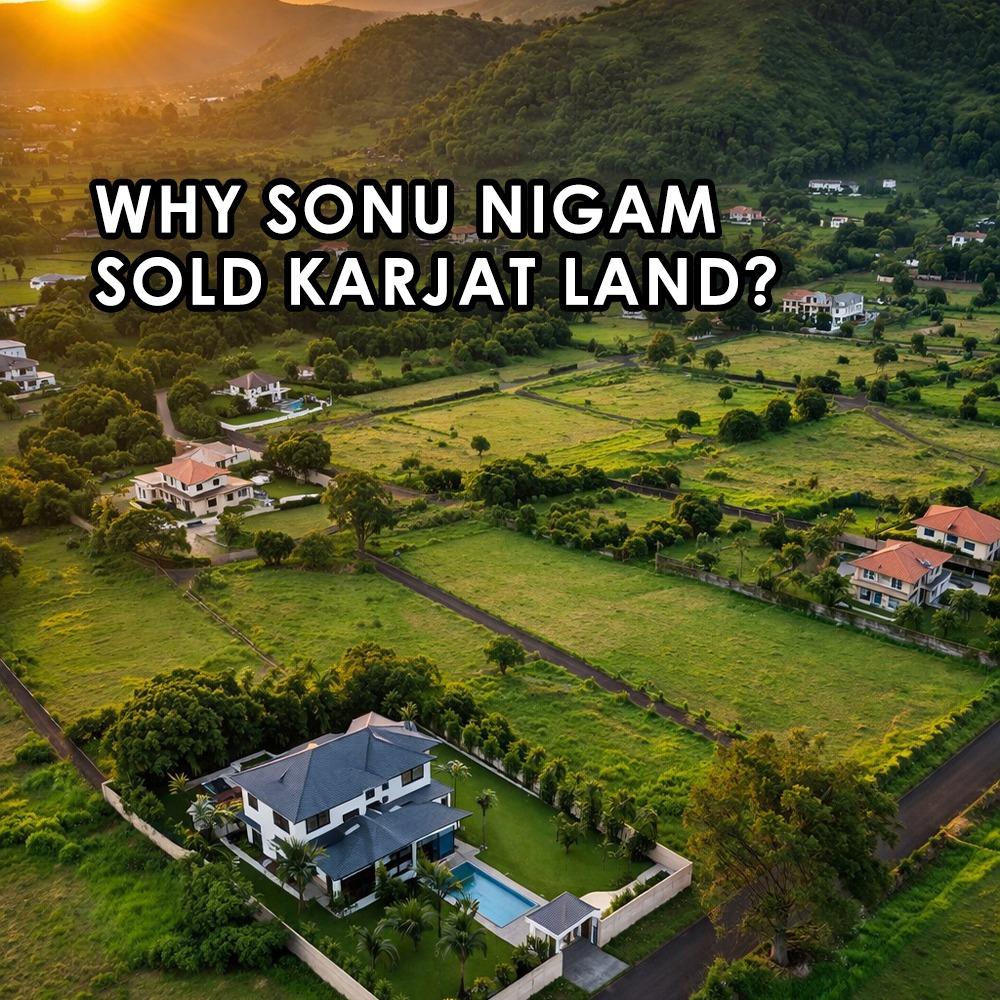
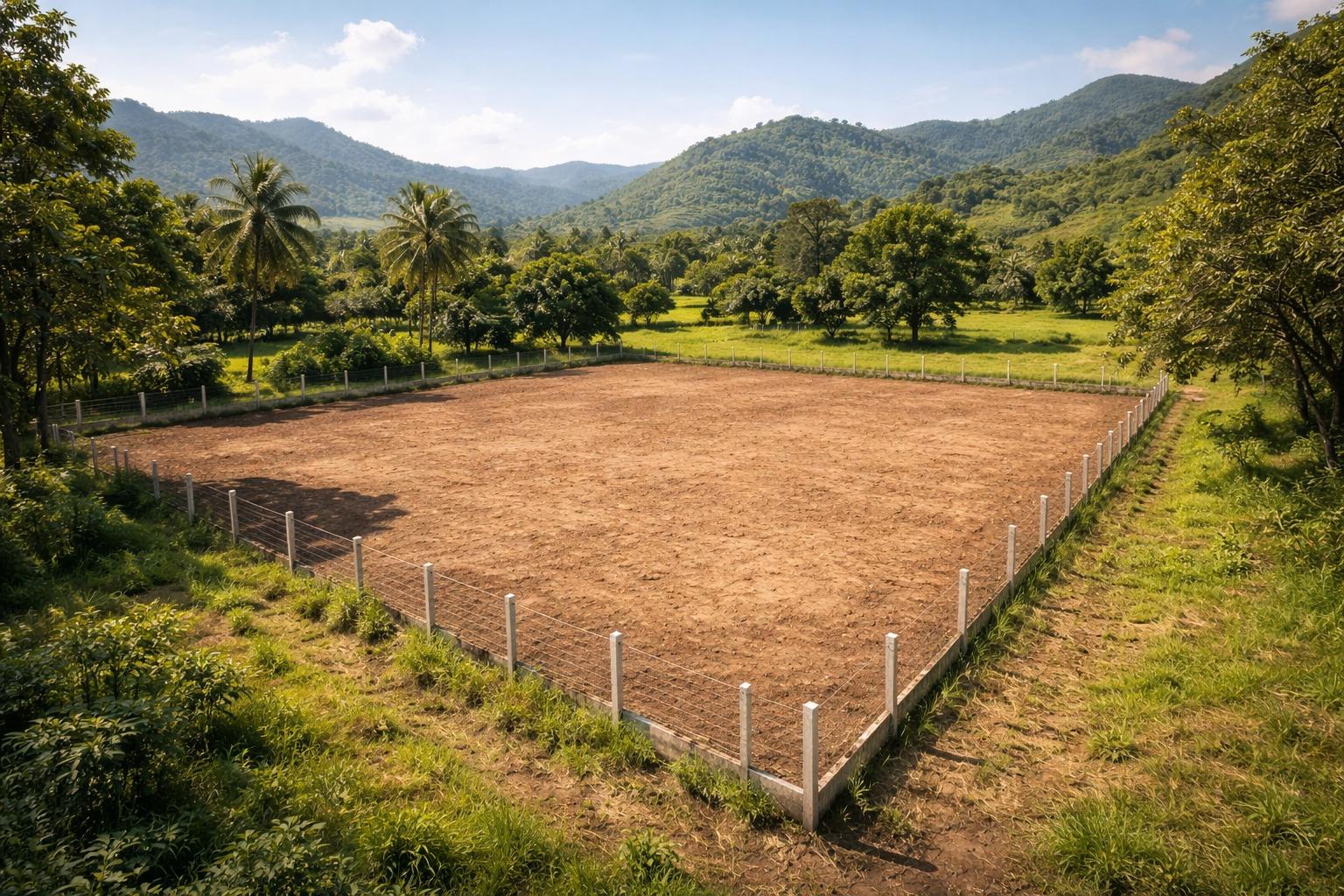
When a Bollywood celebrity sells land, the transaction itself is news. But the location of that sale often tells a more useful story. Singer Sonu Nigam recently sold over 1.9 hectares of land in Karjat, a scenic hill town in Maharashtra's Raigad district, across four separate deals totalling ₹1.95 crore. All four transactions were registered on April 7, 2026, with a combined stamp duty of ₹11.70 lakh. The land parcels, situated in Savele village within Karjat taluka, were sold to different buyers. The sizes ranged from 0.208 hectares to 0.718 hectares, with individual deal values between ₹20 lakh and ₹75 lakh.
Celebrity real estate deals draw attention. But what makes this one worth examining is the market it sits within. Karjat's emergence as a serious investment address in the Mumbai Metropolitan Region is a story that goes far beyond one transaction.
Karjat and the Mumbai 3.0 Vision
Karjat sits roughly 60 to 65 kilometres from Mumbai and has historically been known as a weekend getaway, popular for its green hills, rivers, and relaxed pace. That identity has not disappeared. But layered on top of it now is something more commercially significant.
The Maharashtra government has positioned Karjat as part of the broader Mumbai 3.0 framework, a long-term vision to extend the city's urban and economic footprint well beyond its current limits. Under this thinking, regions like Karjat, Khopoli, and the wider Raigad belt are no longer peripheral. They are the next chapter. Land pooling policies, infrastructure upgrades, and township planning are all part of how the state is signalling intent to develop this corridor seriously.
For investors, that kind of government backing matters considerably. It reduces the uncertainty that typically makes peripheral land a risky bet.
The Airport Effect Is Already Visible
The single biggest driver reshaping Karjat real estate right now is the Navi Mumbai International Airport. Phase one was inaugurated in October 2025, with commercial operations beginning in December 2025. The airport, built across approximately 1,160 hectares in Ulwe, is a joint venture between Adani Airports and CIDCO. In its first phase, it can handle two crore passengers annually, with long-term capacity eventually reaching nine crore.
Karjat sits within roughly 40 to 50 kilometres of this airport. That proximity has already begun moving sentiment and prices. Areas along the Navi Mumbai to Karjat corridor have seen renewed buyer and developer interest since the airport announcement gained momentum. The Panvel-Karjat suburban rail corridor, a 29.6-kilometre double-line project under the Mumbai Urban Transport Project, crossed its first train run milestone in early 2025 and is expected to further cut travel times between CSMT and Karjat by around 30 minutes compared to the existing route.
Better connectivity compresses psychological distance. And in real estate, psychological distance moves prices faster than actual kilometres.
What Land in Karjat Currently Costs
Karjat property prices today cover a wide band. Land values in the region are currently estimated at roughly ₹1,000 to ₹7,000 per square foot depending on location, access road quality, zoning status, and whether the plot is part of a managed development or a raw agricultural parcel. The average residential rate in Karjat as of 2026 sits around ₹5,257 per square foot across all categories, though actual transactions vary significantly based on land classification and micro-location.
Investors drawn to this market broadly fall into three profiles. Some are buying second homes or farmhouses for personal use and occasional rental income. Others are acquiring NA-converted plots for long-term capital appreciation. A third group is developers packaging land into gated villa and plotted communities aimed at Mumbai-based buyers seeking lifestyle properties.
What the Nigam Family Activity Signals
The broader activity linked to the Nigam family is also worth noting as market context. Earlier this year, Agam Kumar Nigam, a relative of Sonu Nigam, purchased a land parcel with a built structure in Madh Island for ₹10 crore. In 2025, Sonu Nigam leased a commercial property in Santacruz East for a five-year tenure at a total rental value exceeding ₹12.61 crore. These are individually separate decisions, but collectively they reflect ongoing engagement with Mumbai-region real estate at different price points and purposes.
Why Buyers Should Pay Attention
The Karjat story is compelling precisely because it is still early. Land prices here remain far below core Mumbai, yet the infrastructure story justifies a patient long-term view. Projections from market observers suggest 20 to 30 percent appreciation in land values over the next three to five years in well-connected parts of the belt.
Summary
Sonu Nigam's sale of over 1.9 hectares in Karjat for ₹1.95 crore is a small transaction against the scale of Mumbai real estate. But it captures the moment perfectly. Karjat is transitioning from a leisure destination into a genuine land investment corridor, powered by the Mumbai 3.0 vision, the Navi Mumbai International Airport, and improving rail and road connectivity. For buyers seeking affordable entry into the Mumbai metropolitan region's expanding frontier, this is precisely the kind of market that rewards early, informed attention.