
Mumbai Mall Rents Jump 20%, NCR at Zero Vacancy: What India's Retail Real Estate Report Really Tells Us
Summary
India's premium retail real estate is booming, with Mumbai mall rents up 15-20% and Delhi-NCR malls at near-zero vacancy. This tight market, fueled by strong demand and constrained supply, presents a $25-30 billion investment opportunity in new developments and redevelopments.

Introduction
India's premium retail real estate market has rarely looked this tight. Documents a retail landscape where the best malls have essentially no space left and the rents for whatever remains are climbing at their fastest pace in years. Mumbai retail rents surged 15 to 20 percent year-on-year, making it the country's steepest rental appreciation market. Delhi-NCR's Grade A malls are operating at 0 to 2 percent vacancy, which for practical purposes means they are full. This is not a temporary tightening. It is the result of structural demand outrunning years of constrained supply, and it is now reshaping where retailers expand, where developers build, and where real estate investors are looking next.
Mumbai's Rental Surge in Numbers
The headline from Mumbai is striking. Premium mall rents in the city have climbed by 15 to 20 percent on a year-on-year basis, the highest appreciation recorded among all major Indian cities. At the top end, monthly rental rates at benchmark properties like Phoenix Palladium and Jio World Drive have reached Rs 777 per square foot per month. These are not back-of-mall utility stores. These rates apply to prime vanilla retail units in the country's most trafficked destination malls.
What is driving this? Two forces are operating simultaneously. International brands are aggressively expanding their India retail footprints and competing for the limited Grade A space available. Entertainment-led retail formats, spanning food and beverage, experiential dining, gaming zones, and family entertainment centres, are taking up larger chunks of mall space and willing to pay premium rents for locations that deliver consistent footfall. When demand from both ends of the tenant spectrum surges at the same time, rents move quickly.
Mumbai also led overall retail leasing volumes among India's top cities during Q1 2026, capturing 26 percent of total gross retail leasing activity across the country, ahead of Delhi-NCR and Bengaluru which jointly held 21 percent each.
Delhi-NCR: The Full Mall Story
If Mumbai's story is about rent, Delhi-NCR's story is about occupancy. Grade A and A+ malls across the National Capital Region have recorded vacancy levels of just 0 to 2 percent, which translates in practical terms to virtually no available space in the best assets. This is an extraordinary level of market tightness for such a large and diverse retail geography.
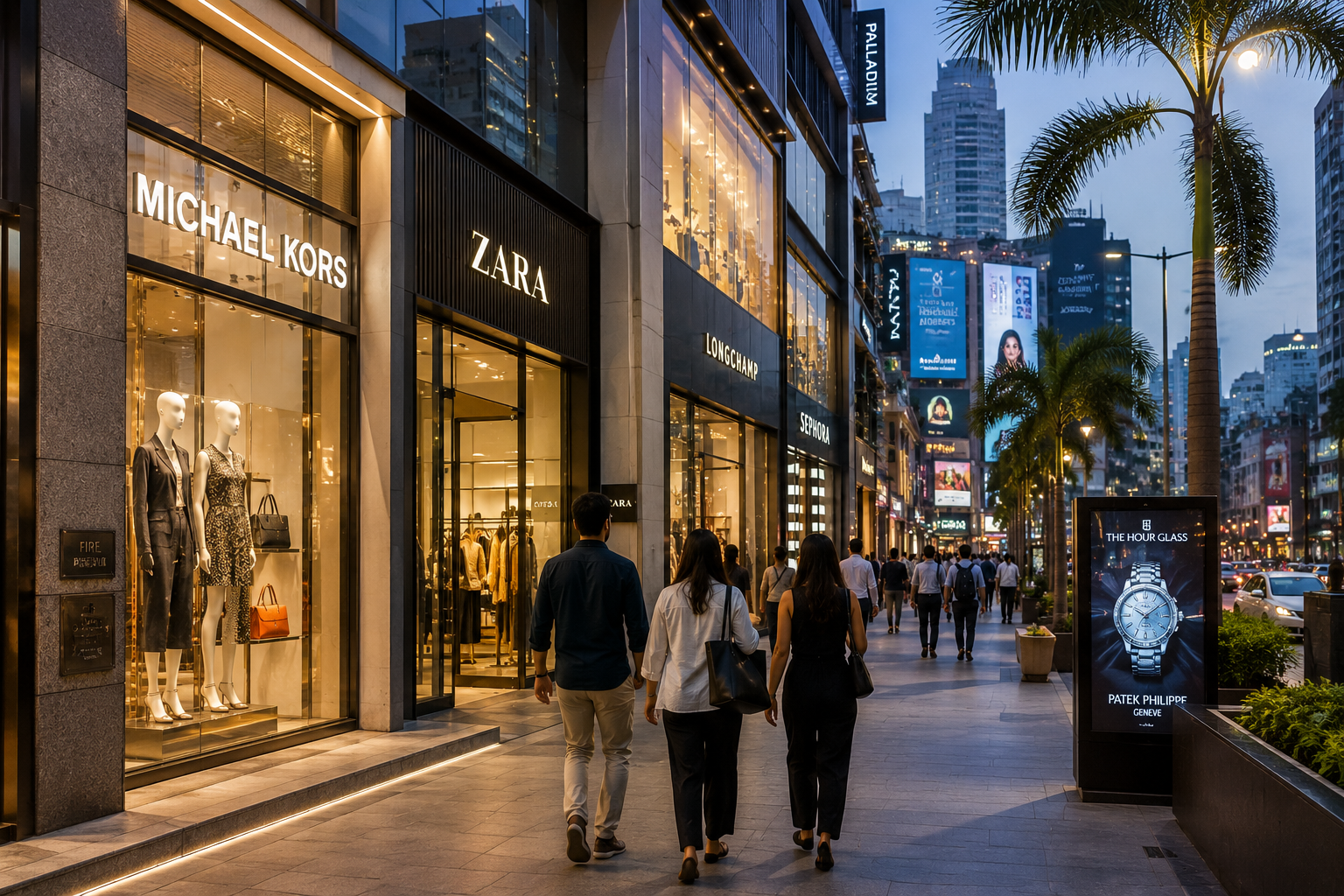
The differentiation between Grade A and A+ assets is also widening. Grade A+ malls in NCR recorded rental appreciation of 8 to 12 percent year-on-year, ahead of the 6 to 8 percent logged by Grade A assets. The gap reflects the growing premium that brands place on asset quality, footfall density, and tenant mix. Zara and Levi's recently signed leases at Pacific Mall. Foot Locker entered DLF Mall of India. These transactions illustrate the calibre of demand driving the market.
With so little space available in existing malls, retailers are increasingly considering mixed-use developments, high streets, and commercial complexes as expansion alternatives. In Q1 2026, high-street retail accounted for nearly 48 percent of total retail leasing nationally, ahead of mall-based leasing at 40 percent. That shift is a direct consequence of supply scarcity in institutional-grade mall assets.
The Supply Pipeline: Where New Retail Is Coming From
Both cities are going to need significantly more supply to keep pace with demand, and developers are responding. Delhi-NCR alone is expected to see approximately 19 million square feet of new retail supply between 2026 and 2031. Across India's top seven cities, the total upcoming organised retail pipeline is projected at over 45 million square feet over the same period.
For Mumbai, the pipeline is more measured. The MMR is expected to see approximately 4 million square feet of new retail supply between 2026 and 2031. Near-term additions in 2026 remain very limited at around 0.25 million square feet, with the bulk of new supply arriving in 2028 at approximately 1.8 million square feet, followed by 2027 and 2030 at 1.2 million square feet each.
Critically, Mumbai's upcoming supply is shifting geographically. Future retail development is increasingly concentrating in suburban micro-markets: Thane, Borivali, and Panvel. Central Mumbai retail is at saturation. The next wave of organised retail will be absorbed by the city's expanding residential catchments further out from the core.
The Redevelopment Opportunity
One of the more consequential findings in the ANAROCK report is the scale of the redevelopment opportunity hiding within the existing retail stock. Across India's major cities, approximately 40 to 50 million square feet of underperforming Grade B and Grade C malls could be repositioned or redeveloped as retailers consistently migrate toward larger destination centres with stronger footfalls and better conversion rates.
Ageing malls with weak tenant mixes, poor planning, and declining visitor numbers are becoming targets for developers who see the potential to either rebuild them as modern retail destinations or convert them into mixed-use assets combining retail, hospitality, and residential components. This redevelopment pipeline could be as significant as new construction in shaping India's retail real estate landscape through 2030.
What Other Markets Are Doing
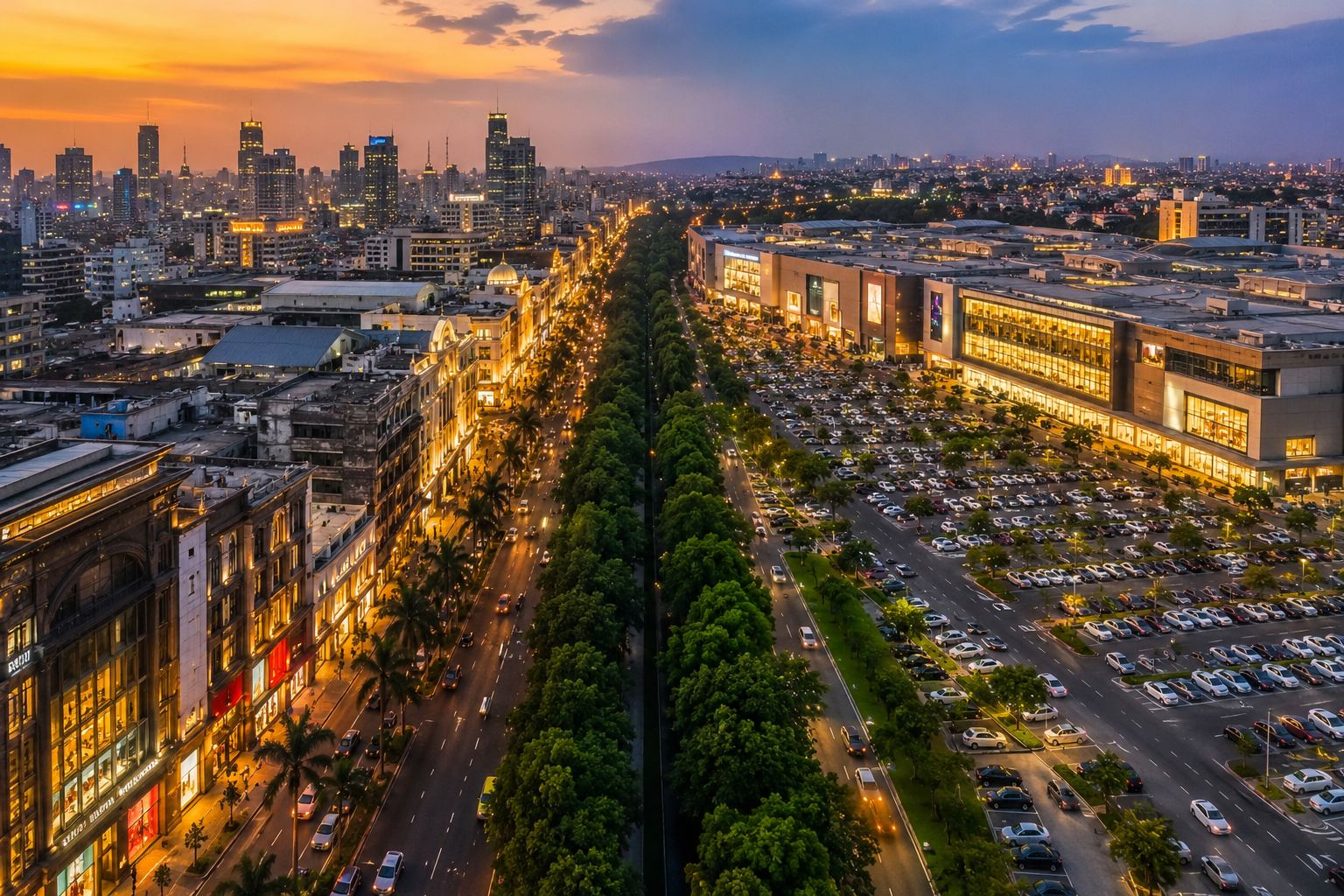
Beyond the two headline markets, the report offers useful data on other cities. Bengaluru maintains healthy occupancy at 5 to 8 percent vacancy with a planned pipeline of over 5 million square feet by 2031. Average mall rents in Bengaluru's Grade A assets currently run between Rs 200 and Rs 250 per square foot per month, a stable range compared to Mumbai's escalating rates. Hyderabad is expected to add approximately 7.1 million square feet of retail supply by 2031, the largest addition among non-NCR cities. Pune is recording active leasing, with brands including Uniqlo expanding there, and average Grade A mall rents ranging from Rs 175 to Rs 225 per square foot.
The Investment Angle
Estimates the total investment opportunity in India's Grade A retail real estate sector at approximately $25 to $30 billion, encompassing existing institutional-grade assets and new developments expected to come online by 2030. This includes both direct property investment and the redevelopment pipeline in ageing malls.
For investors, the signal from this report is clear. Grade A retail in India's top cities is generating genuine pricing power right now, not because of speculation but because supply has been constrained and demand from quality retailers is structurally strong. The occupancy and rental data from NCR and Mumbai are the kind of numbers that draw institutional capital, and the 45-million-square-foot pipeline suggests developers share that conviction.
Summary
Mumbai retail rents surged 15 to 20 percent year-on-year, the steepest appreciation in India, with premium properties like Phoenix Palladium and Jio World Drive touching Rs 777 per square foot monthly. Delhi-NCR Grade A malls hit 0 to 2 percent vacancy, effectively full, with Grade A+ assets recording 8 to 12 percent rental growth. India's upcoming organised retail real estate supply pipeline of 45 million square feet across seven cities through 2031 reflects strong developer confidence. A further 40 to 50 million square feet of older mall stock presents a substantial redevelopment opportunity. The India retail real estate investment opportunity is estimated at $25 to $30 billion through 2030, making this one of the most credibly supported commercial real estate sectors in the country right now.
Video will be embedded from: https://www.youtube.com/watch?v=xgDpCJKsO7I