
Why First-Time Buyers Must Inspect the Site Personally Before Signing Anything
Summary
First-time home buyers must conduct thorough personal site inspections to uncover defects hidden by brochures. Verify structural integrity, test internal fittings, assess the neighborhood at various times, and scrutinize legal documents before signing any agreement, protecting your vital investment.

Introduction
Buying your first home is one of the most significant financial decisions you will ever make. And yet, a surprising number of first-time buyers in India sign agreements and transfer funds based almost entirely on what they have seen in brochures, videos and developer presentations. They trust the rendered images. They believe the possession timeline. They assume the specifications will be delivered as described.
That trust is expensive when it turns out to be misplaced.
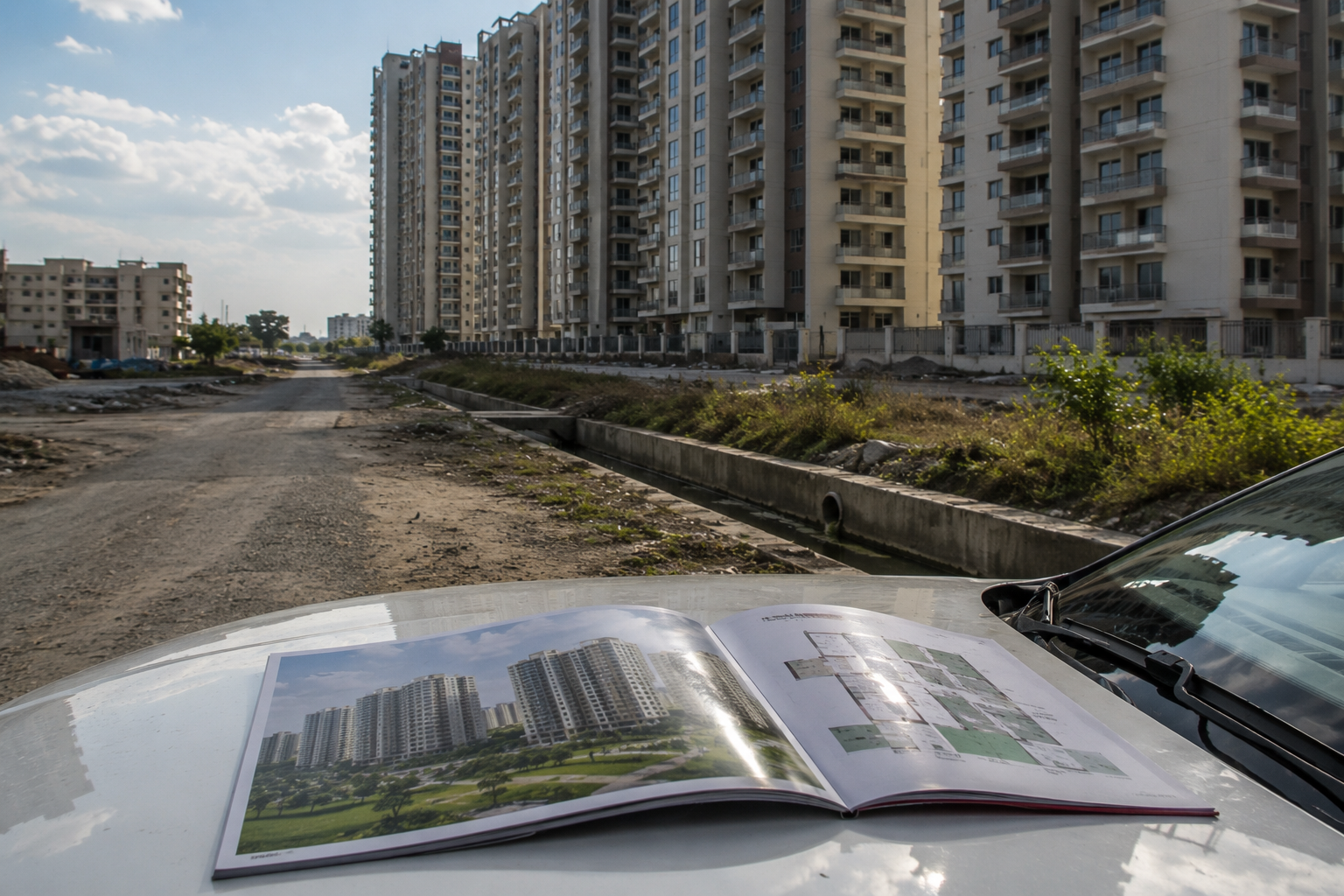
A personal property site visit is not a formality. It is the one opportunity you get to see the real condition of what you are buying, in real light, on real ground. No brochure has ever shown you a waterlogged foundation. No sales video has ever panned to the open sewage line behind the compound wall. Only a visit will.
What a Brochure Cannot Tell You
Developers invest heavily in making projects look their best on paper. The renders are beautiful. The floor plans are clean. The amenity list is comprehensive. But between what is promised and what is delivered, there is often a gap that only a personal site visit home buying experience can reveal.
The construction quality of walls, the actual width of corridors, the proximity to a noisy highway, the state of common areas, the real condition of the lobby, the actual view from the flat's windows rather than an artist's impression of it. These are things you can only assess when you are standing there.
First-time buyers are particularly vulnerable because they have no reference point. They have not bought a home before. They do not know what a well-built slab looks like versus a poorly finished one. They have not yet developed the instinct that experienced buyers use to read a construction site. All the more reason to go personally, and to go more than once.
What to Examine on the Outside First
Start your home buying checklist before you enter the building. Walk the perimeter. Look at the external walls for cracks, especially diagonal ones that run from corners of windows or doors. These suggest structural stress rather than simple plaster shrinkage.
Check the drainage slope around the building. Is rainwater going to pool against the foundation? Look for stains along the base of external walls, which signal rising damp. Assess the compound boundary, the gate quality, the security lighting and the parking layout. Are the spaces sufficient? Is the entry and exit manageable for your vehicle?
Note what surrounds the project. Is there a construction site adjacent that will generate dust and noise for three more years? Is there a main road closer than the site map suggested? These are things no sales office will volunteer.
Go Inside and Test Everything
Once inside the flat itself, the inspect flat before buying process must be systematic. Do not be rushed by the sales team. Take your time.
Run every tap. Check water pressure in the kitchen and all bathrooms. Fill the sink and watch how quickly it drains. Flush every toilet. Slow drainage at this stage means blocked pipes before you have even moved in.
Test every electrical point with a phone charger. Switch every light on and off. Verify that the MCB panel is properly labelled and that switches correspond correctly to their fixtures. Check that earthing is in place.
Press your palm against walls near windows and at the base of external-facing surfaces. Feel for moisture. Look at ceiling corners in bathrooms and kitchens for any staining or mould. Open every door and window. They should move smoothly, close fully and latch cleanly. If they stick or leave gaps at this stage, they will only get worse.
Walk the full length of every room and feel the floor for uneven sections. Uneven flooring causes furniture placement problems and can indicate poor levelling during construction.
Visit the Neighbourhood at Different Times
A first time buyer inspection is incomplete if you only visit the site on a weekday afternoon when the developer is expecting you. Come back on a Saturday morning when traffic is heavy. Visit in the evening when residents of surrounding buildings are home and noise levels are natural. If possible, visit during or just after a rain to assess how the drainage performs under real conditions.
Talk to people. Speak to residents of the surrounding area, not just the developer's staff. Ask them about water supply, power cuts, flooding history and the quality of the roads. Honest answers come from people who have no stake in selling you the flat.
Documents Matter as Much as Bricks
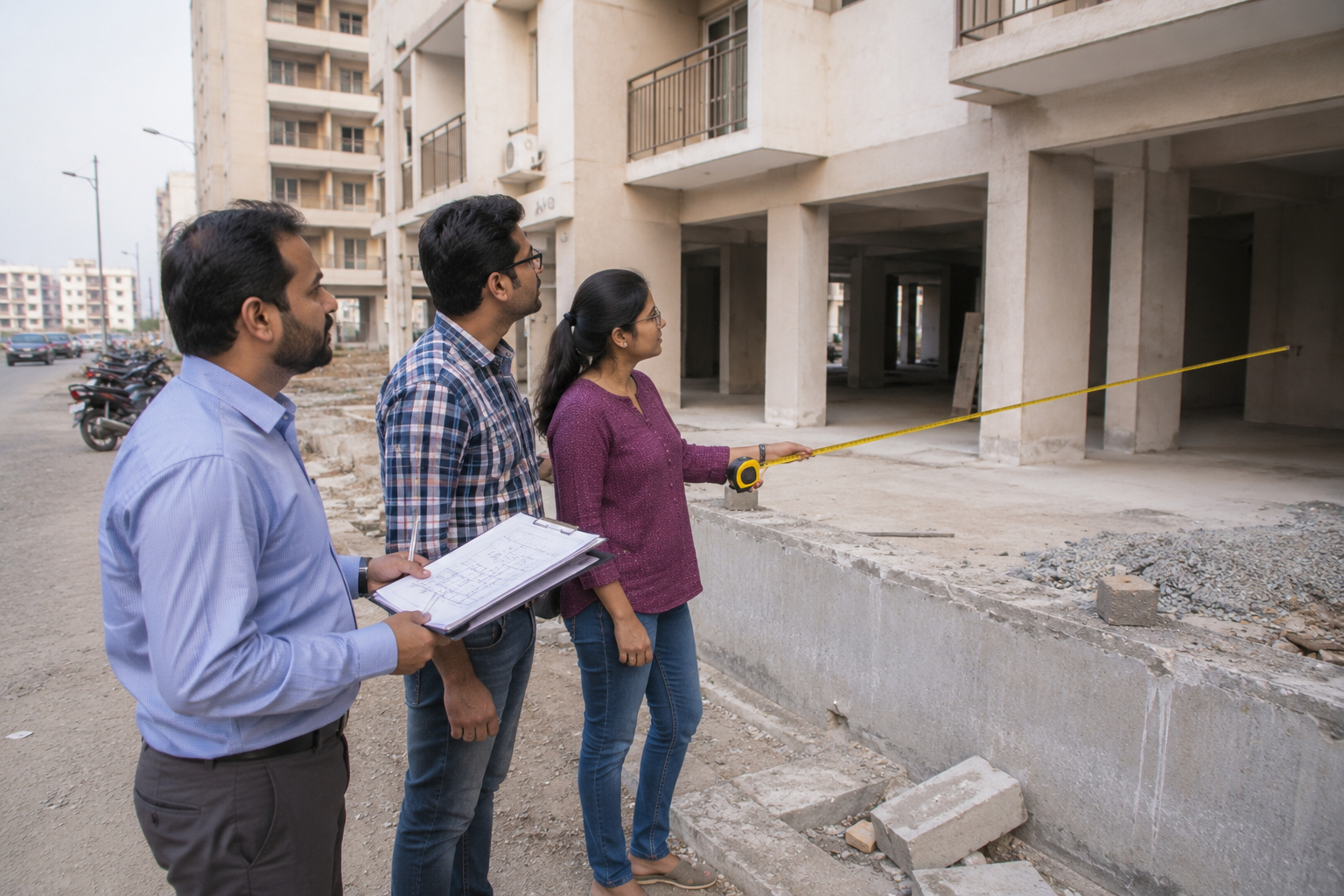
A property site visit must also include a legal check. Ask to see the Occupancy Certificate if the project is complete, the RERA registration certificate, the approved building plan and the Commencement Certificate for under-construction projects. Verify that the carpet area stated in the agreement matches what you are physically standing in.
If any document is missing or the developer deflects when you ask, treat that as a serious red flag.
Summary
Why first-time buyers must inspect the site personally comes down to one irreversible reality: once you sign the agreement and pay the registration charges, every defect becomes your responsibility. A thorough property site visit checklist India covering structure, plumbing, electrical, drainage, neighbourhood quality and legal documents protects your investment before it is too late. No developer presentation, however polished, can substitute for the knowledge you gain by personally standing inside the flat, testing what works and questioning what does not.